Wednesday, October 28, 2026 · On this day in 1919
The U.S. Congress passed the Volstead Act, which provided for the enforcement of Prohibition
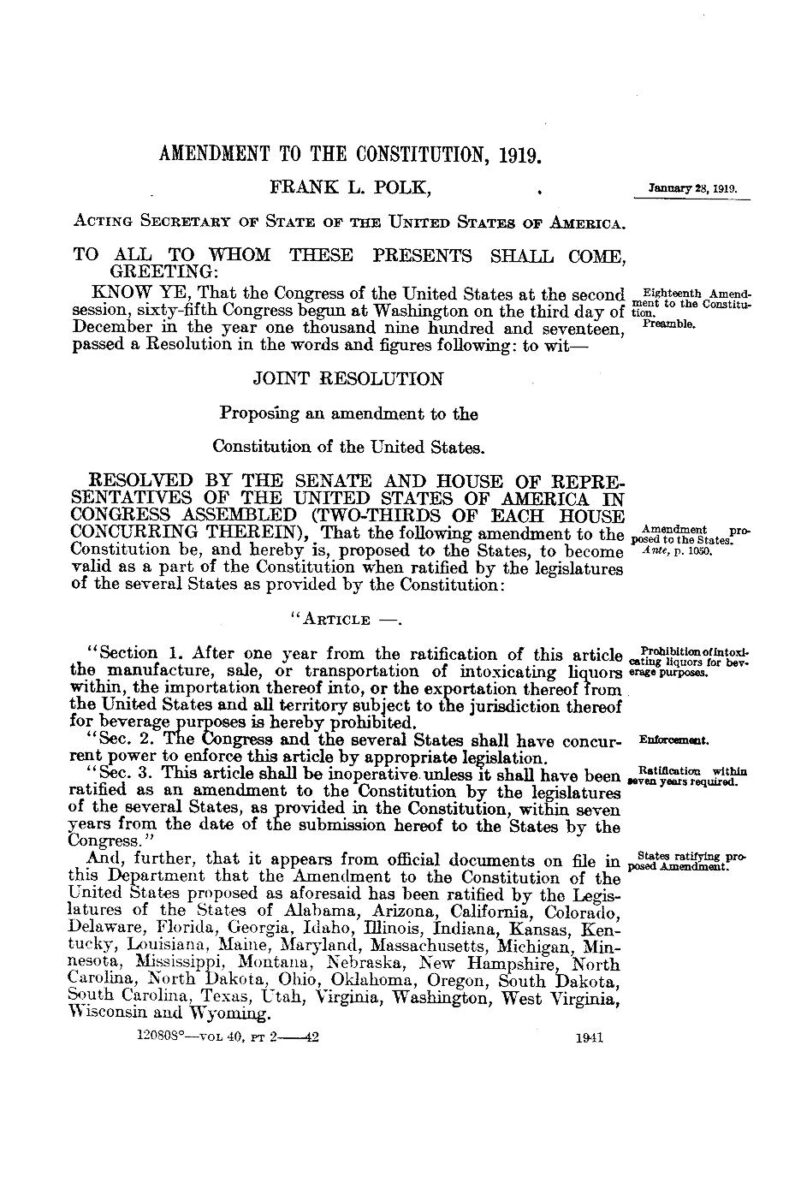
In 1919, the United States Congress passed the Volstead Act, a pivotal piece of legislation that provided for the enforcement of Prohibition. Though the Eighteenth Amendment had already been ratified, banning the manufacture, sale, and transportation of alcoholic beverages, it was the Volstead Act that outlined the specific methods and penalties for enforcing this nationwide ban. Named after Andrew Volstead, the chairman of the House Judiciary Committee, the Act defined intoxicating liquor and the penalties for producing or distributing it, setting the stage for a dynamic and turbulent period in American history. This era saw the rise of speakeasies and bootlegging as people sought to skirt the restrictions imposed by Prohibition, ultimately culminating in significant social and political ramifications. The enforcement of the Volstead Act underscored tensions between federal authority and states' rights, as well as between rural and urban constituencies, which added layers of complexity to the American legal and cultural landscape during the subsequent "Roaring Twenties."
Edited by Chris Schuld