Monday, September 21, 2026 · On this day in 2003
NASA's Galileo spacecraft, which had been orbiting Jupiter since 1995, was purposefully crashed into the planet to avoid contaminating its moons
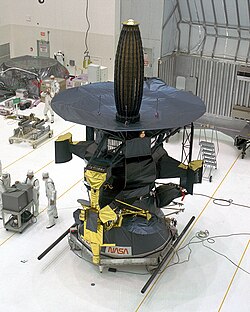
In 2003, humanity bid farewell to the Galileo spacecraft, as it was deliberately plunged into the tumultuous atmosphere of Jupiter, marking the end of a remarkable mission. Launched in 1989 by the space shuttle Atlantis, Galileo was tasked with a singular mission: to unravel the mysteries of the largest planet in our solar system and its retinue of moons. Over the course of its 14-year journey, the spacecraft made significant discoveries, including the confirmation of a subsurface ocean on Europa and detailed observations of volcanic activity on Io. NASA made the poignant decision to end the mission by directing Galileo to burn up in Jupiter's atmosphere, a maneuver designed to prevent any possibility of contamination to the potentially habitable moons, such as Europa, ensuring they remain pristine for future exploration. This dramatic conclusion not only safeguarded the celestial bodies within Jupiter's orbit but also symbolized a significant achievement in space exploration, as Galileo's findings continue to inform and inspire the scientific community.
Edited by Chris Schuld