Monday, September 14, 2026 · On this day in 1901
U.S. President William McKinley died after being shot by an assassin, leading to Theodore Roosevelt becoming president
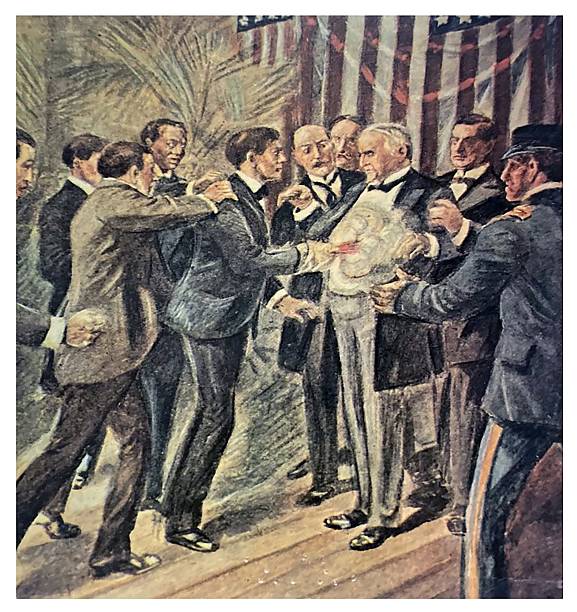
In 1901, a pivotal moment in American history unfolded as President William McKinley succumbed to his injuries after being shot by an assassin in Buffalo, New York, at the Pan-American Exposition. McKinley was initially expected to survive the assassination attempt by anarchist Leon Czolgosz, but he ultimately died of wound-related complications on September 14, 1901. This tragedy ushered in the presidency of Theodore Roosevelt, who was serving as Vice President at the time. At 42 years old, Roosevelt became the youngest president in the nation's history, embarking on a transformative presidency that would see significant progressive reforms. As McKinley was laid to rest, Roosevelt took the oath of office, marked by a dramatic shift in American leadership that would influence both domestic and foreign policies. Roosevelt's rise to the presidency symbolized a dawning era of change, marked by a robust pursuit of anti-trust laws and an assertive stance on America's role on the world stage, forever altering the trajectory of the United States.
Edited by Chris Schuld