Monday, August 24, 2026 · On this day in 1891
August 24th marks the anniversary of Thomas Edison patenting the motion picture camera in 1891, during the height of the Industrial Revolution
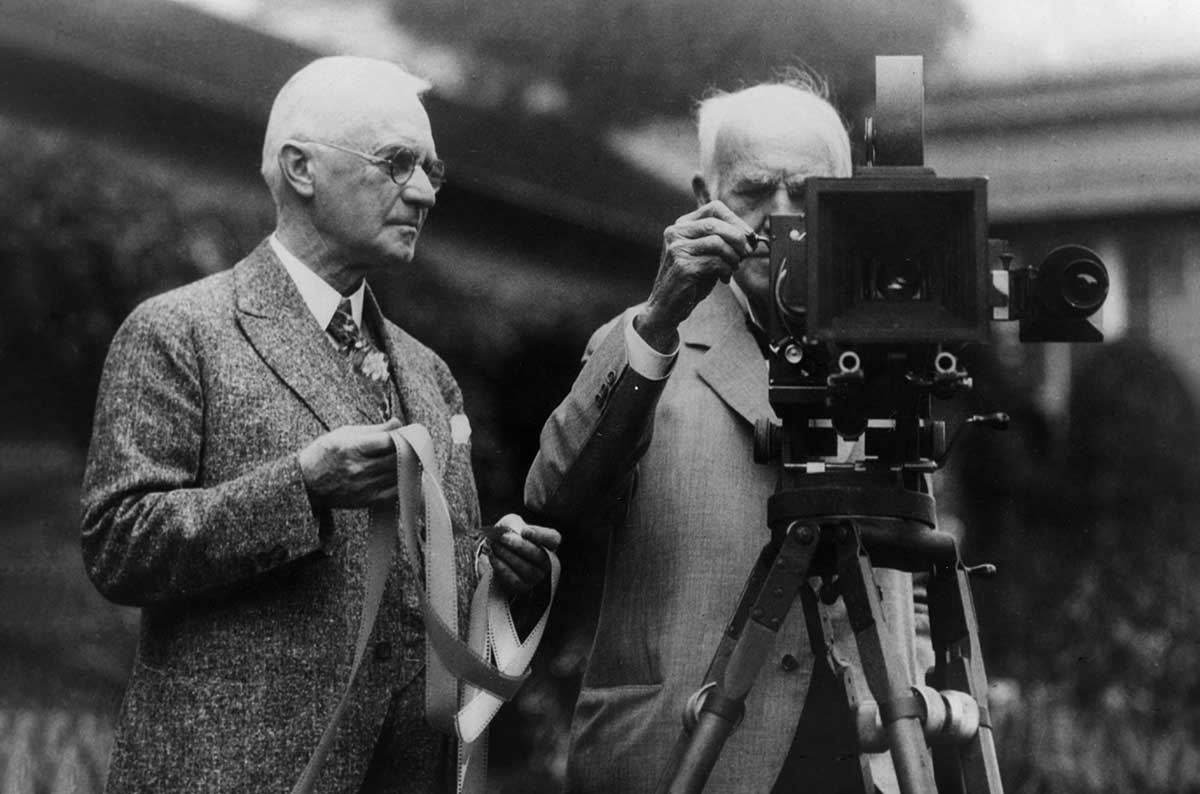
In 1891, Thomas Edison made a significant leap in cinematic history by patenting the motion picture camera, also known as the kinetograph. Edison's innovation marked the dawn of a new era in entertainment and visual arts, as it facilitated the ability to record and reproduce motion, providing audiences with moving images for the first time. This invention was part of Edison's broader exploration into visual and sound technologies, building on his earlier successes with the phonograph. The kinetograph was engineered alongside the Kinetoscope — a peep-hole viewer — both devised in Edison's renowned Menlo Park laboratory. This marriage of moving images with synchronized sound would lay the groundwork for future developments in the film industry and turn Edison's studio into a pioneer of motion picture production, foreshadowing the later domination of cinematic storytelling.
Edison's motion picture camera patent catalyzed the eventual rise of an entire industry. Film would grow from short, silent clips into a dominant force in global culture and communication. Despite Edison's primary contribution in patenting the kinetograph, credit for the invention involves several key figures, including Edison's assistant, William Kennedy Laurie Dickson, who played a crucial role in its development. Dickson's work on the kinetoscope's design and the use of celluloid film stock were instrumental in making motion pictures a practical reality. This groundbreaking achievement set the stage for what would become one of the most significant mediums of the 20th and 21st centuries, forever transforming the landscape of how stories are told and experienced worldwide.
Edited by Chris Schuld