Saturday, July 18, 2026
On July 18th in 64, the Great Fire of Rome began, lasting for six days and causing widespread devastation
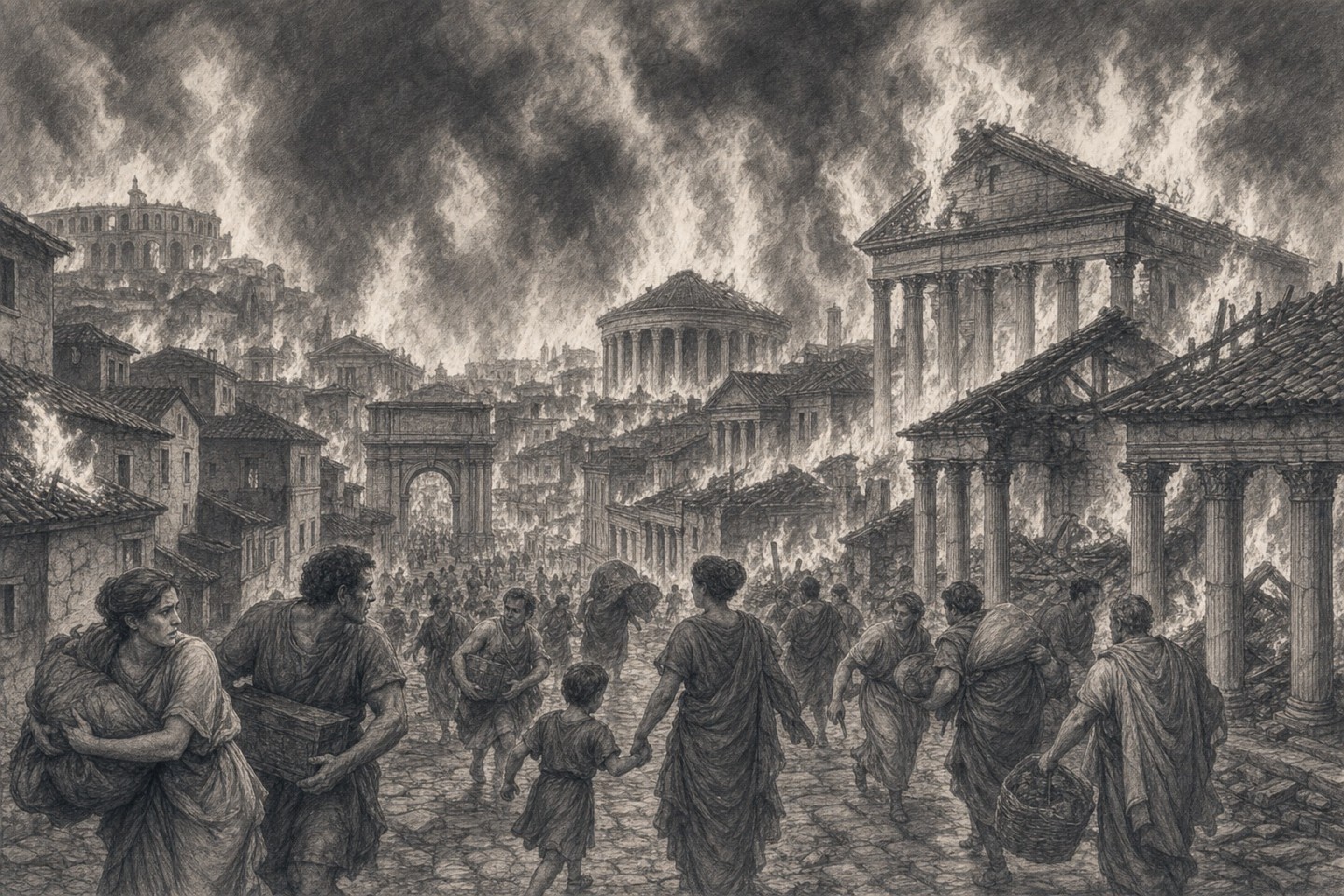
In 64 AD, the vibrant heart of the Roman Empire faced an unprecedented catastrophe as The Great Fire of Rome ignited, ravaging the city with its relentless blaze. The inferno began on the night of July 18th in the densely populated district of the Circus Maximus, an area teeming with wooden structures and narrow alleys that fueled the fire's swift expansion. For six harrowing days, flames consumed the ancient metropolis, reducing homes, temples, and public buildings to charred remnants. Eyewitness accounts, including those of the historian Tacitus, suggest that Emperor Nero may have watched the devastation from a safe distance, amid rumors that he played his lyre while Rome burned—a dramatic narrative that has since become part of his controversial legacy. Though theories about Nero's direct involvement in starting the fire largely lack consensus among historians, the aftermath was indisputable: approximately two-thirds of the city lay in ruins. In the wake of the calamity, Nero initiated ambitious reconstruction projects, which included implementing new urban planning guidelines designed to mitigate future conflagrations. Despite Nero's efforts to restore the capital, the Great Fire remained etched in the annals of history not only as a tale of destruction but also as a pivotal moment that reshaped the architectural landscape of ancient Rome.
Edited by Chris Schuld